

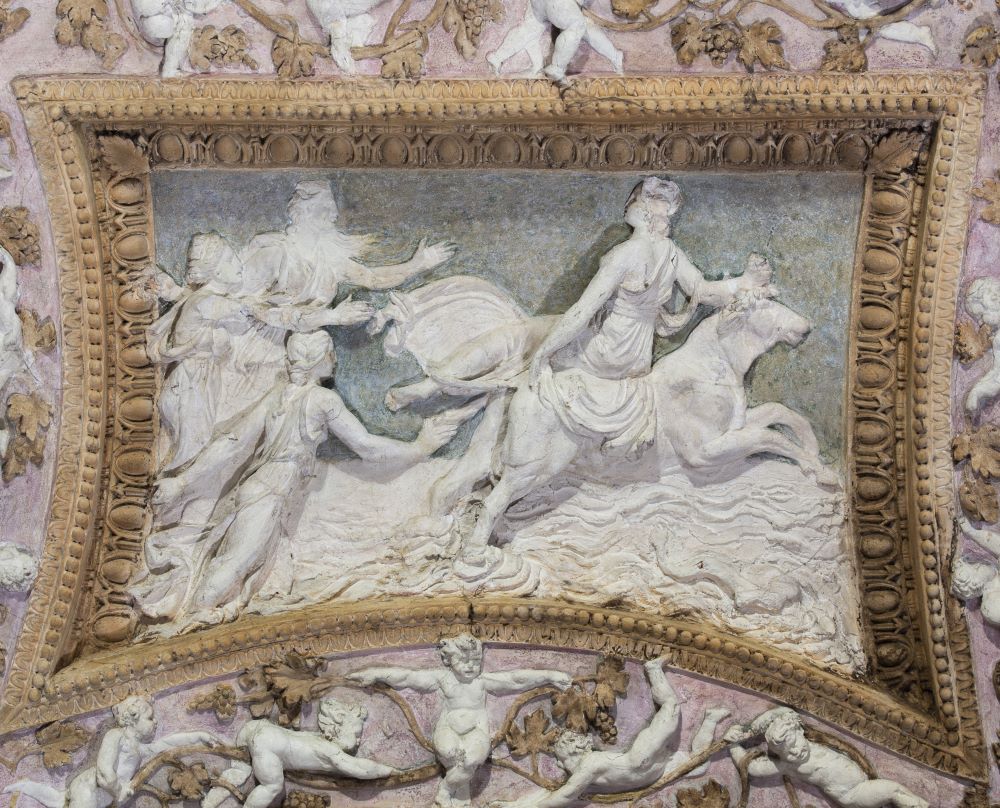
In sixteenth-century Europe the way of seeing and thinking about Nature changes. Unknown objects and creatures brought from overseas, together with new ideas and observations, complicate and enrich the traditional visions of the Cosmos as the expression of divine power and Nature as the book of Creation, arousing a renewed interest in the relationship between human and non-human.
The world begins to be seen through new eyes: Nature still arouses wonder and fear, but it is also the object of inquiry and study. Artists and mathematicians, philosophers and artisans examine and reproduce its forms and the vital processes that bring it to life.
Nature becomes a source of investigation that challenges accepted wisdom. Within the setting of Palazzo Te, where deities, humans and natural forces converge and collide, the exhibition reflects on this sea change, inviting us to rethink our relationship with Nature and to rebuild a link that today seems ever more fragile.
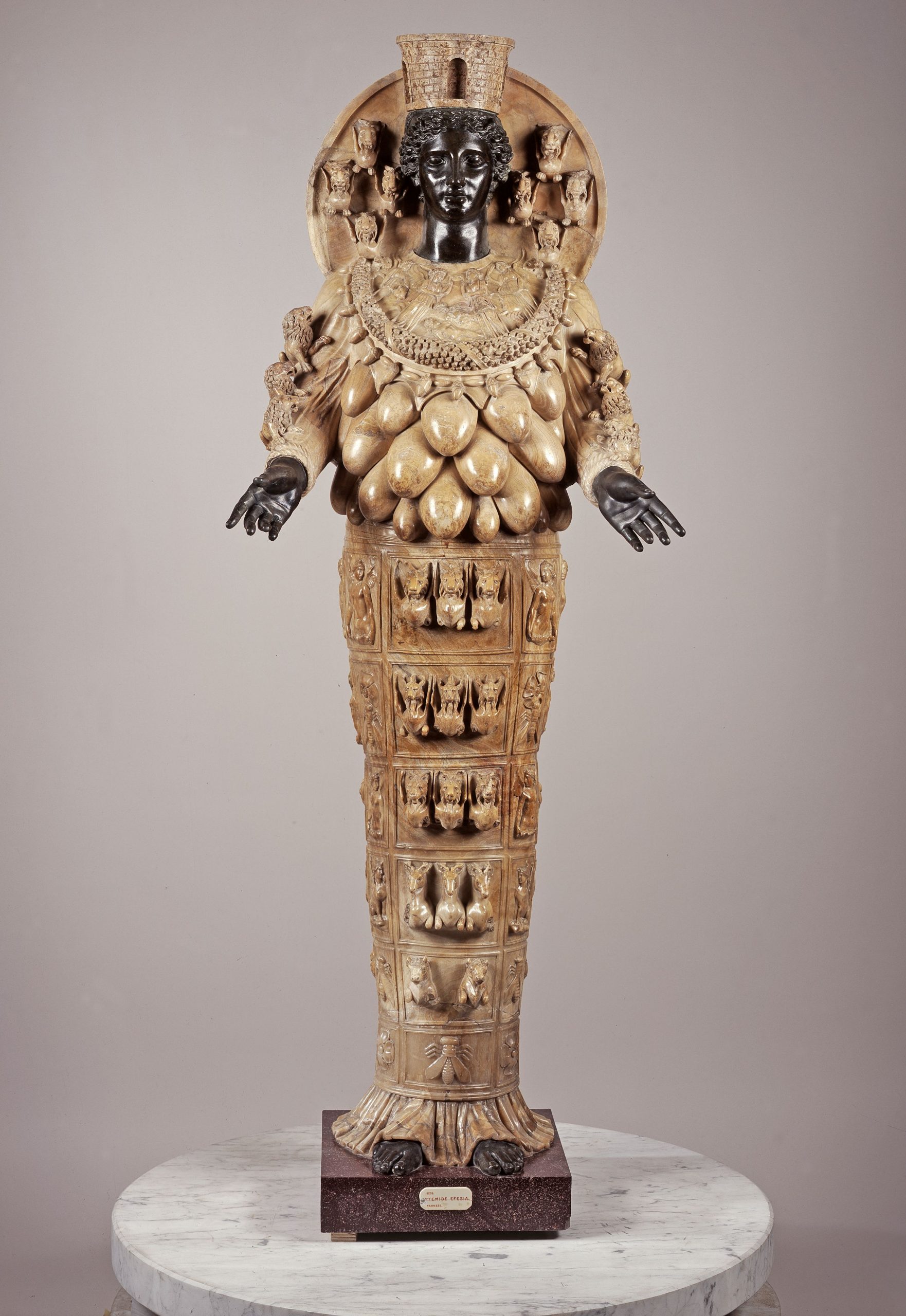
In the sixteenth century, the generative power of Nature was powerfully evoked by Diana of Ephesus, an ancient and enigmatic female figure characterised by numerous breast-like protuberances, who is depicted as encompassing all living beings within her garment. At Palazzo Te, this unmistakable goddess appears more than once: in the Small Cross Vault Chamber, in the Chamber of the Eagles and in the Loggia of the Secret Garden. Having moved to France in 1530 after working with Giulio Romano at Palazzo Te, Francesco Primaticcio included the figure in the decoration of the royal Château de Fontainebleau, while Niccolò Tribolo sculpted the goddess for a fountain at the same residence, casting her as a source of life. Alongside these works are pieces by Christiane Löhr, who revives the contemplation of the miracle of life in her naturalistic drawings, borrowed from the FAI’s Villa Panza collections.
Roman art, Diana of Ephesus
2nd century AD, alabaster, bronze (head and hands restored)
Naples, MANN – Museo Archeologico Nazionale di Napoli
The Diana of Ephesus stands apart from the other deities of the ancient world, who are usually athletic and heroic.
The goddess appears to gaze at us with unmoving eyes, her head stands out against a disc animated by winged lions. Enigmatic breast-like forms proliferate across her torso, possibly referring to offerings once hung by worshippers around the goddess’s neck. Winged lions, capricorns, oxen, bees, flowers and sphinxes line her arms and legs.
Depicted as a source of nourishment, the figure became, in the sixteenth century, the personification of the goddess Nature.
Roman art, Diana of Ephesus
2nd century AD, alabaster, bronze (head and hands restored)
Naples, MANN – Museo Archeologico Nazionale di Napoli
The sculpture was used to support the basin of a fountain in the garden of the Château de Fontainebleau, which explains the position of the arms, raised on either side of the head. Overflowing water covered the figure like a thin veil, heightening its generative power.
Tribolo transforms the ancient iconography of Diana of Ephesus into a goddess of Nature, whose numerous breasts are a source of nourishment. The fertility of nature is also referred to in the phallic detail carved on the back.
Francesco Primaticcio, Study with Scenes from the Story of Proserpina, with Herms of Priapus, Ceres, Cybele and Bacchus
c. 1533–1536, pen and brown ink, heightened with white lead, black chalk, on prepared beige paper
Paris, Musée du Louvre, Département des Arts Graphiques
The drawing is a study for the decoration of one of the rooms at the Château de Fontainebleau, a residence much loved by Francis I of France.
Primaticcio depicted the goddess Nature there and, in the side panels, reworked figures already devised by Giulio Romano for Palazzo Te; the reclining woman in the scene on the right, for example, closely resembles a figure in the stucco frieze of this room.
Like Tribolo’s sculpture, this drawing confirms the fascination with the curious iconography of the goddess Nature at the court of Francis I, a ruler who loved complex, obscure allegorical imagery.
Christiane Löhr, Bogenform und kleine Erhebung (Arch Form and Small Rise)
2010, blades of grass, plant seeds
Varese, Villa Panza
Christiane Löhr, Drei Quader (Three Cubes)
2010–2017, blades of grass, plant stems
Varese, Villa Panza
Christiane Löhr’s elegant compositions evoke the generative force of nature, inexhaustible yet at the same time sustained by fragile balances.
Capturing the poetic potential inherent in slender, simple elements such as the blades of grass that make up these complex, delicate microarchitectures, the artist invites us to reflect on our relationship with the natural world.
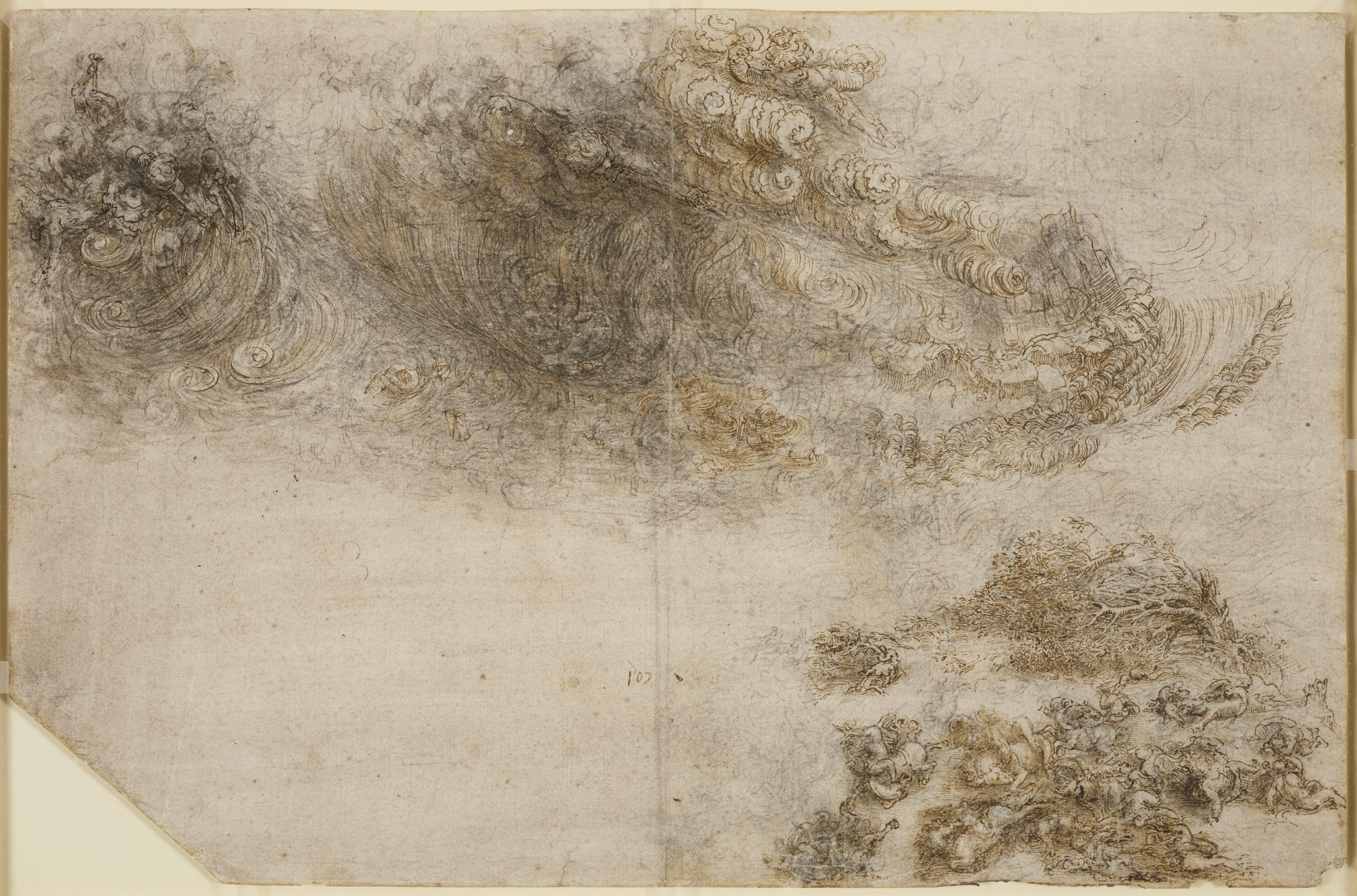
Creation and destruction go hand in hand. In the sixteenth century, life was frequently upended by natural disasters such as earthquakes, floods, fires and plagues. Superhuman, enigmatic events were at times seen as divine punishment for sins to be atoned for, while at other times they were examined and interpreted through various accounts and mythical visions in an effort to reveal their mystery. This is suggested by the Colmeda altarpiece, a work created for public devotion following a catastrophic flood, while Leonardo da Vinci imagined a storm unleashed by a merciless deity with puffed out cheeks. Where the sketches of Giambologna and Tribolo depict unruly, untameable rivers as bearded, Herculean old men, in the Sistine Chapel tapestry the earthquake becomes a giant who, gripped by fury, shatters the earth’s crust.
Jacopo Bassano, Madonna and Child with Saint Anthony of Padua and Saint Crescentius of Mainz (Colmeda Altarpiece)
1576, oil on canvas
Feltre, Chiesa di Santa Maria degli Angeli
On 27 June 1564, after days of torrential rain, the Colmeda watercourse swelled dangerously and finally burst its banks with great force at Tezze, a hamlet of Feltre, sweeping away houses, mills, livestock, people and belongings.
The historic event is vividly depicted in this altarpiece, which serves as a collective ex-voto dedicated to the Virgin, to whom the community of Tezze turned for protection following the disaster.
In the lower part of the painting, the artist Jacopo Bassano appears to identify man as the primary cause of the catastrophe. In the sixteenth century — just as today — intensive land use and aggressive deforestation compromised the delicate balance of the countryside.
Workshop of Pieter van Aelst (after a design by Raphael), Saint Paul in Prison and an Earthquake
1517–1521, wool, silk, gilt-silver thread
Vatican City, Musei Vaticani
The tapestry, part of a famous series woven to a design by Raphael for the Sistine Chapel, illustrates an episode from the life of Saint Paul recounted in the Acts of the Apostles (16:16–40).
Imprisoned in Macedonia together with his companion Silas for preaching the Gospel, Paul is freed by divine intervention, manifested as a violent earthquake powerful enough to shake the prison to its foundations.
The natural event is depicted as a colossal figure, whose destructive force extends beyond the borders of the tapestry. The same explosive effect is staged by Giulio Romano in the adjoining Chamber of the Giants.
Niccolò Tribolo, River Deity
c. 1540–1550, clay, wax
Florence, Museo Nazionale del Bargello
In this sketch, probably a study for a garden fountain, Tribolo reworks the classical iconography of the river deity in a dynamic key.
In place of the traditional figure reclining comfortably, one elbow resting on an overflowing vase, Tribolo imagines the river god as an elderly yet athletic man. His body is depicted in a dynamic twist that suggests an underlying, restrained energy, as if he is on the verge of emptying the entire contents of the vase beside him in a single, swift movement.
Giants in the making
Giambologna’s two terracotta models have been linked to the design phase of the colossal grotto-fountain of the Appennine, built in the 1580s at the Medici Villa di Pratolino, not far from Florence.
The sculptor initially conceived a river deity, later transforming the figure into a dynamic mountain-giant.
In the Appennine Colossus in particular, the rough treatment of the terracotta heightens the naturalistic force of the figure’s expression: the material seems to come alive before our eyes, as the giant, pushing up on his left hand, rises to create a spring of water.
Drawing catastrophe
Leonardo da Vinci created numerous drawings illustrating natural events — from atmospheric phenomena to calamities such as storms, floods and landslides. In these two sketches, Leonardo’s characteristic scientific curiosity and analytical powers of observation are complemented by concerns of a more purely artistic nature. Aware of the limits of human perception, the artist-scientist strove to render two highly destructive, dynamic events intelligible: a storm overwhelming trees, men and animals, and the collapse of a mountain, perhaps brought down by man to facilitate quarrying.
Giambologna, Allegory of the Apennines
before 1580, terracotta
Florence, Museo Nazionale del Bargello
Leonardo da Vinci, Landslide
c. 1512–1518, black chalk
Windsor Castle, The Royal Library. Lent by His Majesty King Charles III
Leonardo da Vinci, Storm
c. 1513–1518, black chalk, pen and brown ink, diluted brown ink, heightened with white lead
Windsor Castle, The Royal Library. Lent by His Majesty King Charles III
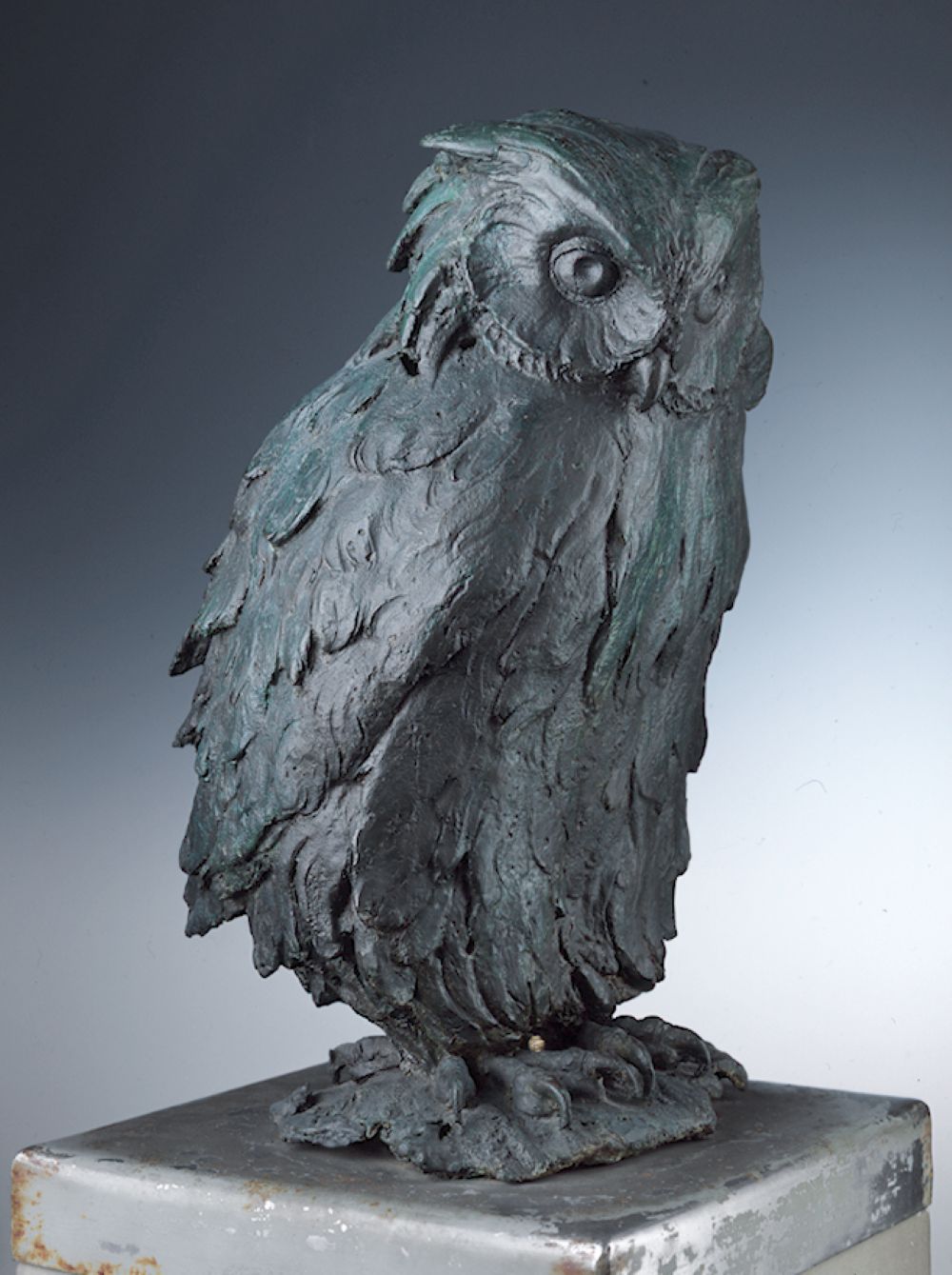
Entering the artificial grotto of a sixteenth-century garden meant immersing all the senses in a mysterious environment full of surprises.
The irregular surfaces of limestone rocks, river pebbles and shells invited the eye and the hand to explore a varied, ever-changing material; the gurgling of water accompanied visitors along a series of fountains and small waterfalls, while the damp air, coolness and vegetation created the impression of being in an untouched paradise. The secrets of Nature became a source of wonder and delight. The bronze birds on display here, attributed to the sculptors Bartolomeo Ammannati and Giambologna and inspired by models observed from life, were originally placed in a grotto at the Medici’s Villa Castello, just outside Florence. Among the rocks of that sheltered spot, the animals found an idyllic refuge, just as the visitors who admired them did. With its rich repertoire of creatures — some, in bronze, now held at the Bargello, others, in marble, still in situ — the grotto was a space where nature and artifice were superbly intertwined.
The success of these grottoes is reflected at Palazzo Te in the Grotto of the Apartment of the Secret Garden, built at the end of the sixteenth century.
Bartolomeo Ammannati (attr.), Eagle Owl
1567–1568, bronze
Florence, Museo Nazionale del Bargello
Giambologna (attr.), Eagle
1567–1568, bronze
Florence, Museo Nazionale del Bargello
Bartolomeo Ammannati (attr.), Hen Pheasant
1567–1568, bronze
Florence, Museo Nazionale del Bargello
Keen to experiment with new creative practices that would allow them to imitate Nature effectively, many sixteenth-century artists turned to casts taken from life. This technique involved making a mould from a plant, a flower or an animal’s body.
The frog mould on display here, from the workshop of Bernard Palissy, was used to produce a series of ceramic frogs intended to decorate a fountain. To make the mimicry still more convincing, the artist finished the piece with realistic colours. More commonly, these moulds were used to produce small objects in bronze or silver, as with the fighting lizards from a Paduan workshop and the flowers on the precious vase by Wenzel Jamnitzer.
Objects made using casts from life were highly sought after by sixteenth-century collectors, who loved to handle and examine these accurate replicas of the natural world up close. The technique made it possible to render with great precision and fidelity details such as the scaly pattern of a lizard’s skin, the imperfections of a crab’s shell, or the delicate ripples of a petal.
Shared interests across disciplines
What connects a fossil crab from the collection of the naturalist Ulisse Aldrovandi to a bronze crab, cast from life and used as a writing implement? Or a small drawing by Parmigianino, a study for the fresco decoration of the basilica of Santa Maria della Steccata in Parma, to a page from the scholar Pietro Andrea Mattioli’s Discourses?
All these objects express a shared curiosity about the natural world, which sixteenth-century scientists and artists each explored using the means and tools specific to their own profession.
New models
Frogs, lizards, snakes, shells, fish, and crustaceans were among the unusual subjects that inspired artists such as the ceramicist Bernard Palissy and the Paduan bronze-casters.
The objects displayed here, varying in materials, subjects, and artistic styles, demonstrate the keen observational skills of sixteenth-century artists and their commitment to accurately reproducing nature’s finest details: subtle variations in colour, intricate forms, and dynamic movement—evident in the bronze lizards locked in combat and in the meticulously rendered illustrations in Ulisse Aldrovandi’s manuscript.
Wonders in silver
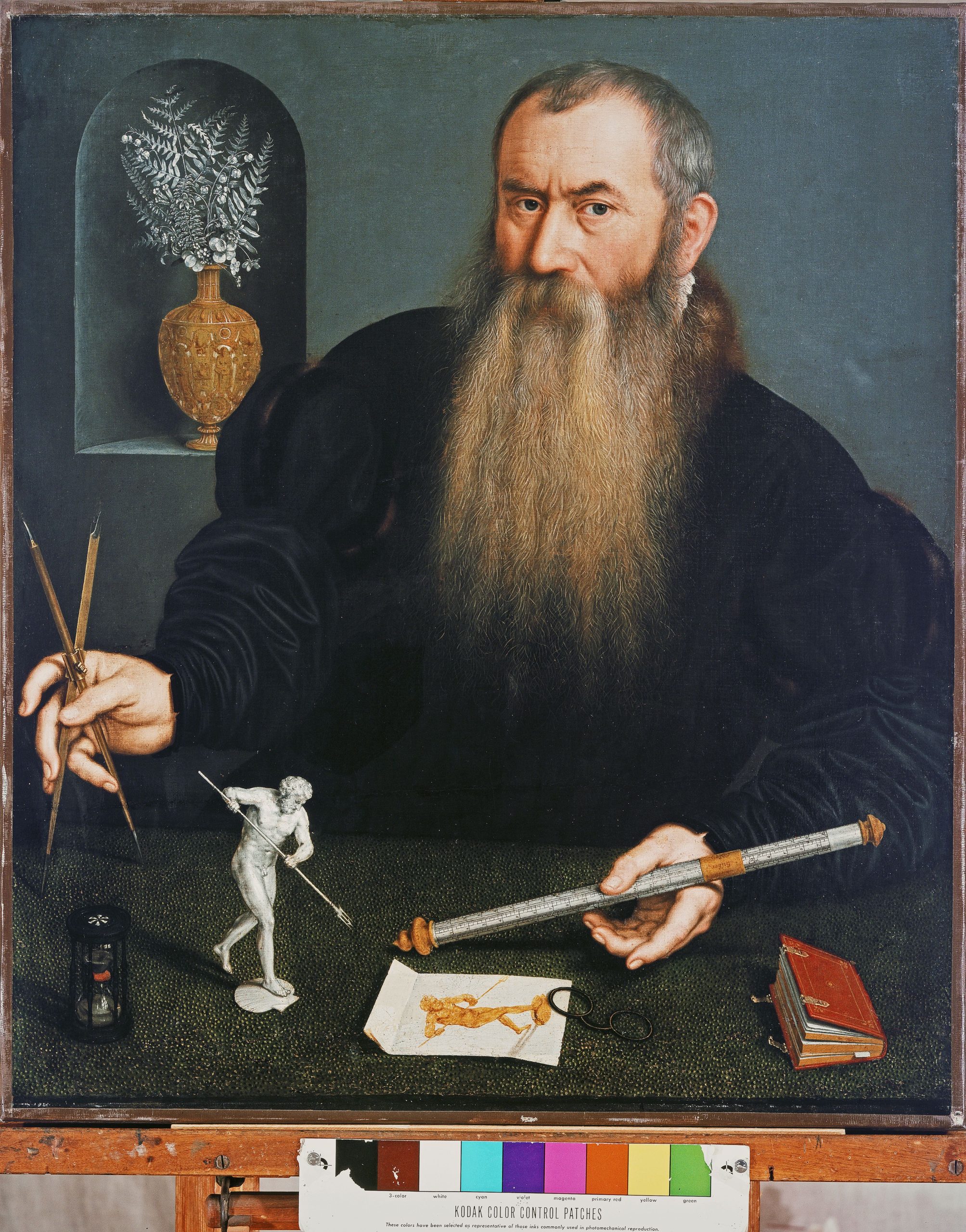
Due to his advanced technical expertise and refined aesthetic sense, the goldsmith Wenzel Jamnitzer became famous for his accurate life-cast reproductions of small animals in silver — lizards, frogs, insects and snakes — later used to decorate refined works of goldsmithery, such as the cup on display here.
Equally prized were the finely crafted silver casts of plants and flowers that Jamnitzer used to fashion refined bouquets much admired by the German elites. The vase on display here, very similar to the one shown in the portrait, offers rare surviving evidence of this extraordinary yet fragile body of work.
Wenzel Jamnitzer (attr.), Vase with Flower Casts
c. 1550–1585 (vase of later date), cast silver, silver filigree, gilt silver
Paris/Lisbon, PAB/Aguiar-Branco
Nicolas de Neufchâtel, Portrait of the Goldsmith Wenzel Jamnitzer
1562–1563, oil on panel
Geneva, MAH – Musée d’Art et d’Histoire
Manner of Bernard Palissy, Tray with Rustic Figures
c. 1600–1650, lead-glazed terracotta
Paris, Musée du Louvre, Département des Objets d’art du Moyen Âge, de la Renaissance et des temps modernes
Manner of Bernard Palissy, Dish with Rustic Figures
c. 1570–1590, lead-glazed terracotta
London, Victoria and Albert Museum
Workshop of Bernard Palissy, Frog
c. 1565–1610, lead-glazed terracotta
Paris, Musée du Louvre, Service de l’Histoire du Louvre
Workshop of Bernard Palissy, Frog Mould
c. 1570, plaster
Paris, Musée du Louvre, Service de l’Histoire du Louvre
Workshop of Bernard Palissy, Lizard Cast
c. 1570, plaster
Paris, Musée du Louvre, Service de l’Histoire du Louvre
Paduan bronze-caster, Fighting Lizards
mid-16th century, bronze
Venice, Fondazione Musei Civici di Venezia, Museo Correr
Anonymous artist, Lizards, Scorpion and Flower
c. 1550–1605, pen and ink, tempera, watercolour
Bologna, Biblioteca Universitaria di Bologna, Ms. Aldrovandi, Volume unico miscellaneo
Wenzel Jamnitzer, Cup with Plant, Reptile and Insect Casts
c. 1550–1560, gilt silver
Oxford, The Ashmolean Museum, bequeathed by Michael Wellby, 2012
Harpactocarcinus Crab Fossil
Bologna, Museo di Palazzo Poggi, Aldrovandi Collection
Paduan bronze-caster, Spider Crab
mid-16th century, bronze
Venice, Fondazione Musei Civici di Venezia, Museo Correr
Anonymous artist, Crustaceans
in Pietro Andrea Mattioli, I discorsi (1585)
Mantova, Biblioteca Comunale Teresiana
Parmigianino, Study of a River Crayfish
c. 1531–1535, pen and ink, heightened with white lead
London, The Courtauld Gallery
From the mid-sixteenth century, drawing from life became a fundamental tool for creating and spreading knowledge of the natural world. Artists both famous and obscure devoted themselves to portraying flowers, plants, insects, birds, fish and other living creatures, spontaneously capturing details that were hard to put into words, such as the colour or shape of rare plants and animals recently imported from the Americas. These drawings circulated across Europe among naturalists, who had them copied and turned into prints, making them tools of shared knowledge and a source of inspiration for artists.
Besides collecting specimens of flora and fauna on a global scale, the Bolognese scholar Ulisse Aldrovandi gathered thousands of these naturalistic drawings into bound volumes — some of which are on display in this exhibition — creating what amounted to a vast encyclopaedia of the natural world.
Aldrovandi was in contact with the leading experts on Nature of his day — from apothecaries to physicians, botanists to taxidermists — as well as with princes such as Grand Duke Francesco de’ Medici and Duke Vincenzo Gonzaga, who, like him, delighted in collecting rare plants and exotic animals.
An interest in botany
Turning a genial gaze on the viewer, the anonymous botanist painted by Bartolomeo Passerotti seems to be explaining to his audience the properties of the chamomile plant behind him.
His elegant black robe reflects the social standing he had attained, comparable to that of Ferrante Imperato in Naples and Ulisse Aldrovandi in Bologna. Aldrovandi included a drawing of the chamomile plant in one of his albums, on display here.
Interest in the natural world, confirmed by the success of Pietro Andrea Mattioli’s book, was further fuelled in the sixteenth century by the arrival in Europe of new species from every corner of the globe, such as the pineapple and the exotic birds meticulously illustrated by Jacopo Ligozzi for Francesco I de’ Medici.
Painting from nature
Artists such as the anonymous Master of Hartford quickly adopted the representational methods developed by sixteenth-century naturalists and used them to create compositions of great originality. It was also from images like those collected in Ulisse Aldrovandi’s albums that artists drew inspiration to invent a new pictorial genre known as ‘still life’, even though such paintings create an effect of vitality rather than stillness.
In this work, the Master of Hartford presents only an apparently faithful depiction of reality, by bringing together vegetables, flowers and fruit that bloom or ripen at different times of the year.
Fish: a convergence of food, art and knowledge
Above, below and around a fish stall, Vincenzo Campi meticulously depicted specimens of clearly recognisable species, portraying them with remarkable detail.
Like artists, natural scientists were also regular visitors to fishmongers, in search of new species and rare specimens to study. Markets thus became places where artists, scientists and figures including the fish sellers themselves, would meet and exchange information.
It is worth noting that, in the sixteenth century, all aquatic creatures were considered ‘fish’, including crustaceans, molluscs, shellfish, turtles and even mammals such as seals.
Bartolomeo Passerotti, Portrait of a Botanist
c. 1570, oil on canvas
Rome, Galleria Spada
Anonymous artist, Portrait of Ferrante Imperato’s Museum
in Ferrante Imperato, Historia naturale (1599)
Mantova, Biblioteca Comunale Teresiana
Anonymous artist, Chamomile
c. 1550–1605, tempera and ink
Bologna, Biblioteca Universitaria di Bologna, Ms. Aldrovandi, Tavole di piante, fiori e frutti, vol. 10
Jacopo Ligozzi, Fig Branch with Dominican Widowbird, Paradise Whydah and Combassou Widowbird
c. 1577–1580, black chalk, tempera, ink, on paper prepared with white lead
Florence, Gallerie degli Uffizi, Gabinetto dei Disegni e delle Stampe
Jacopo Ligozzi, Pineapple
c. 1577–1586, black chalk, tempera, ink, on paper prepared with white lead
Florence, Gallerie degli Uffizi, Gabinetto dei Disegni e delle Stampe
Anonymous artist, Fruit Trees
in Pietro Andrea Mattioli, I discorsi (1557)
Mantova, Biblioteca Comunale Teresiana
Anonymous artist, Various Kinds of Pears
c. 1550–1605, tempera, ink
Bologna, Biblioteca Universitaria di Bologna, Ms. Aldrovandi, Tavole di piante, fiori e frutti, vol. 4
Master of Hartford, Vase of Flowers, Fruit and Vegetables
before 1607, oil on canvas
Rome, Galleria Borghese
Vincenzo Campi, The Fishmonger
1578–1581, oil on canvas
Milan, Pinacoteca di Brera
Jacopo Ligozzi, Red Snapper
c. 1577–1587, black chalk, tempera, ink, on paper prepared with white lead
Florence, Gabinetto dei Disegni e delle Stampe
Circle of Hendrick Goltzius, Lumpfish
c. 1590, watercolour, ink, black chalk
Stockholm, Nationalmuseum, purchase 2015 Wiros Fund
The court was a stage from which the lord and his family projected an image of prestige, wealth, cultural refinement and intellectual curiosity, not least through the collecting of works of art, natural specimens and objects brought from Asia, Africa and the Americas.
Veritable microcosms, theatres of knowledge where the human, the natural and the unknown intersected, sixteenth-century collections filled visitors with wonder and astonishment, much as the works in this room still do.
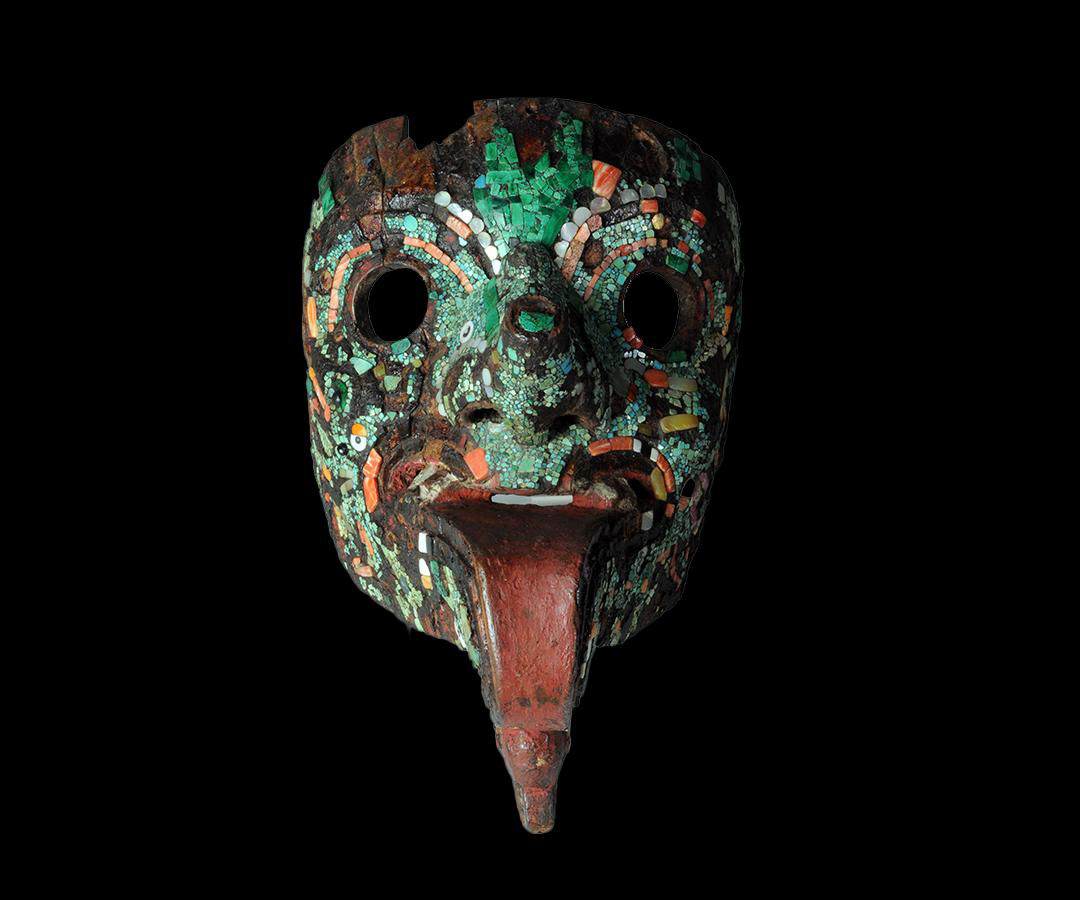
The objects in the display case act as a bridge between the natural world and the artificial one of artistic creation: nature is observed with the analytical eye of Jan Brueghel; shells from distant seas are embellished with elaborate metal mounts; coconuts are combined with owl wings and a genuine eagle’s talon; a narwhal’s tooth becomes the horn of the mythical unicorn; an elephant’s tusk is transformed into a hunting horn, and an ostrich egg into an ivory cup. Watching over them all is the precious Yacateuctli mask, once owned by the naturalist Ulisse Aldrovandi.
Men and animals
These works express the sixteenth-century fascination with nature — whether wondrous or simply curious.
Agostino Carracci portrays three figures from the Farnese court in Rome. Their proximity to the animals reminds us that, although court life offered protection to people such as Amon the dwarf, Pietro the madman and Arrigo the hairy, it also subjected them to a role of entertainment, much like that of the animals with whom they share the scene.
The lively study by Annibale, Agostino’s brother, perhaps inspired by a street performance, reflects on the interactions between man and monkey. In his drawing for Ulisse Aldrovandi, the Mantovan painter Teodoro Ghisi faithfully portrays one of the Gonzaga family’s Ara macaws.
Giuseppe Arcimboldo, The Cook
c. 1570, oil on panel
Stockholm, Nationalmuseum, gift 1993 Nationalmusei Vänner
Skilfully arranging a suckling pig, a chicken and other meats between two metal plates, together with a slice of lemon and an oak sprig, Giuseppe Arcimboldo creates a reversible image: turned upside down, the sumptuous dish of food takes on the features of a grotesque face.
This unusual device transforms a familiar image into something ingenious, able to surprise and amuse the viewer while suggesting the complexity of reality.
Arcimboldo served Emperor Rudolf II and Archduke Ferdinand II of Tyrol, both devotees of alchemy, fascinated by the secrets of Nature, patrons of intellectuals and scientists, and important collectors of natural specimens, curiosities and artworks.
Giuseppe Arcimboldo, The Vegetable Gardener
1590–1593, oil on panel
Cremona, Museo Civico Ala Ponzone
In this painting, Arcimboldo puts his skill as a painter of natural things to full use, realistically depicting an onion, tubers, vegetable leaves, a walnut, the husks of two hazelnuts and even a chestnut burr.
Here too, the vegetables and fruit carefully arranged in a bowl conceal a second image: turned upside down, the composition becomes the smiling face of an enigmatic, mischievous vegetable gardener.
Arcimboldo’s imaginative paintings were highly sought after by European collectors, as shown by the numerous workshop versions and copies still in circulation today.
Caravaggio, Self-Portrait as Bacchus
c. 1595, oil on canvas
Rome, Galleria Borghese
Dressed up as Bacchus, the deity associated with wine, pleasure and artistic inspiration, Caravaggio portrays himself here in an ambiguous light. His head is wreathed in ivy and a bunch of grapes sits in his hands, as tradition demands, yet he appears at the same time wasted and frail, perhaps convalescent or even wounded.
In depicting the myth, Caravaggio introduces an element of doubt, a sense of vulnerability, transforming a traditional subject into an unusual, dramatic and startling image.
The painting dates from the early years of his career, when Caravaggio was still working on pieces commissioned from day to day, portraying above all young men alongside still-life details — fruit, flowers, and musical instruments.
German manufacture, Narwhal Tusk
on turned ivory base
Giordano Art Collections
German manufacture, Cup in the Form of an Ostrich
c. 1590, nautilus shell, chased, engraved and gilt silver
Oxford, The Ashmolean Museum, bequeathed by Michael Wellby, 2012
Flemish or German manufacture, Cup
c. 1540–1560, coconut, eagle’s talon, gilt silver
Oxford, The Ashmolean Museum, bequeathed by Michael Wellby, 2012
German manufacture, Cup in the Form of an Owl
c. 1540–1580, carved coconut, silver, gilt silver
Oxford, The Ashmolean Museum, bequeathed by Michael Wellby, 2012
Jan Brueghel the Elder, Mouse with Roses, Caterpillar and Butterfly
c. 1605–1611, oil on copper
Milan, Ambrosiana
Trapani manufacture, Spoon
17th century, coral
Giordano Art Collections
German manufacture, Salt Cellar in the Form of a Giant Snail
c. 1608, nautilus shell, engraved and gilt silver
Florence, Gallerie degli Uffizi, Palazzo Pitti, Tesoro dei Granduchi
Nahua culture (Puebla, Mexico), Mask of Yacatecuhtli
early 16th century, wood, mosaic (turquoise, malachite, lignite, shell, brass, glass)
Rome, MUCIV – Museo delle Civiltà
Sapi-Portuguese manufacture (Sierra Leone), Oliphant
c. 1490–1530, ivory
Rome, MUCIV – Museo delle Civiltà
German manufacture, Cup in the Form of a Monster
second half of the 16th century, nautilus shell, chased, engraved and gilt silver, bronze
Florence, Gallerie degli Uffizi, Palazzo Pitti, Tesoro dei Granduchi
Cornelis Jansz van Veerdenborch, Cup with Perseus and Andromeda
c. 1620, nautilus shell, chased, engraved and gilt silver
Giordano Art Collections
Nuremberg manufacture, Cup
c. 1630, ostrich egg, turned ivory, gilt silver
Giordano Art Collections
Sapi-Portuguese manufacture (Sierra Leone), Salt Cellar
c. 1490–1530, ivory
Bologna, Musei Civici d’Arte Antica, Museo Civico Medievale di Bologna
Teodoro Ghisi, Blue-and-Yellow Macaw
1571, tempera, ink
Bologna, Biblioteca Universitaria di Bologna, Ms. Aldrovandi, Tavole di animali, vol. 1
Agostino Carracci, Triple Portrait of Arrigo the Hairy, Pietro the Madman and Amon the Dwarf
1598–1599, oil on canvas
Naples, Museo e Real Bosco di Capodimonte
Annibale Carracci, Study of a Monkey
c. 1588–1590, red chalk
London, British Museum, bequeathed by Sir Hans Sloane, 1753
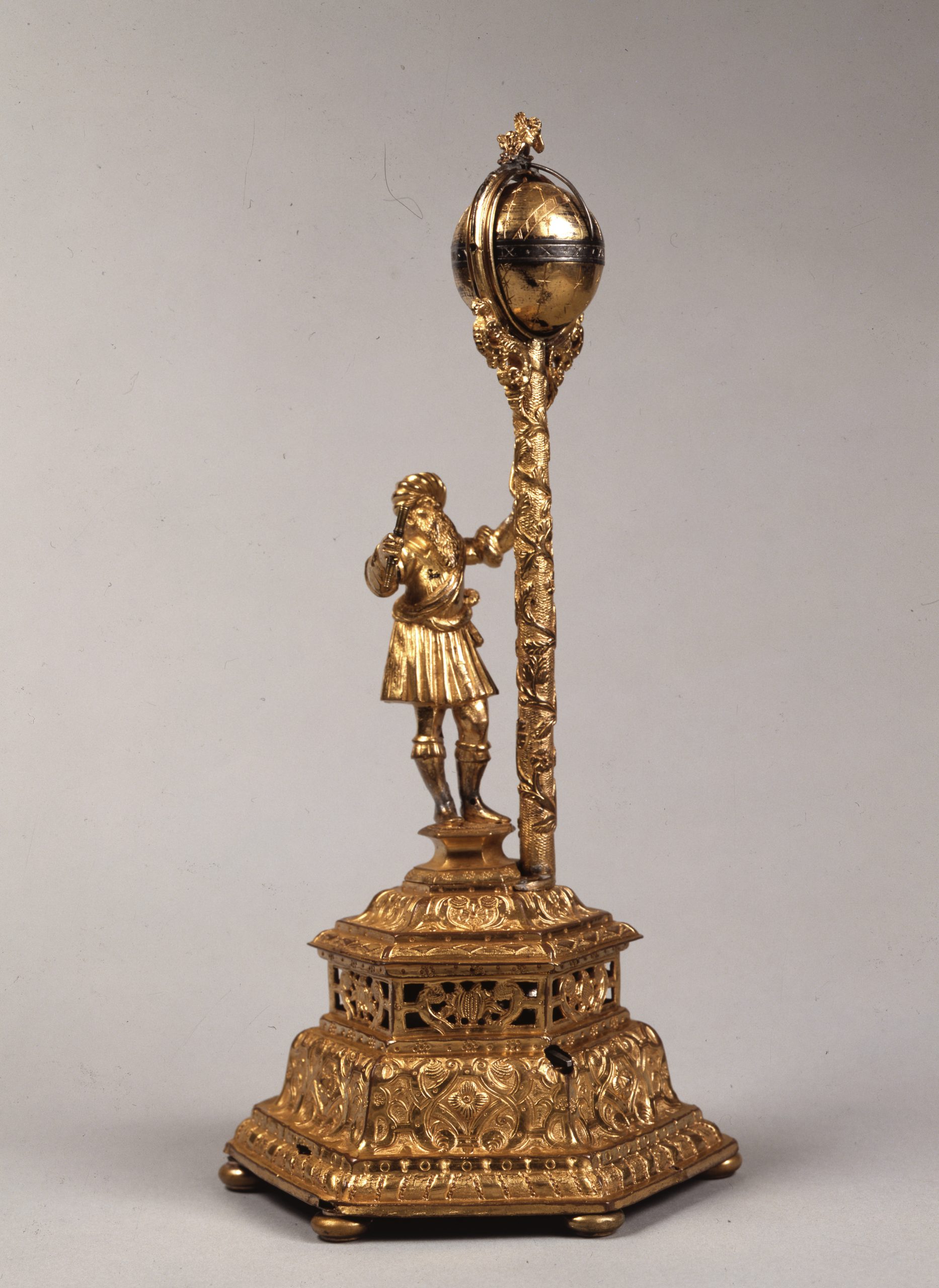
From wonder to imitation: the automata exhibited here show how people in the 1500s tried to copy nature by creating machines that mimic the way living things move. Using mechanical parts, these creations blend art and engineering to show how understanding can help us imitate real-life phenomena. The word ‘automaton’ comes from the Greek, meaning ‘acting of its own accord’. In the West, the invention of these machines is traced in particular to the great mathematicians of the Greek tradition, above all Hero of Alexandria (1st century AD). A mathematician, engineer and astronomer, Hero designed mechanisms driven by water pressure, steam or compressed air. Some, such as war machines, served practical purposes; others reproduced the complex rotations of the heavenly bodies or the movement of animal and human figures, filling spectators with wonder.
During the Renaissance, the use of these mechanisms spread to a wide range of objects: from the tiny watches that European elites wore proudly on their fingers, to the great astrological dials that adorned civic towers, such as the one in Piazza delle Erbe in Mantova; from garden fountains that, driven by water pressure, produced music, sudden jets of water and even rainbows, as at the Fontana dell’Organo in Tivoli, to the automata on display here. Paired with table clocks or used at court, these precious objects offer a rare glimpse of the great age of Renaissance automata.
In search of movement
Made around the turn of the sixteenth and seventeenth centuries, the automata on display here were considered luxury objects, valued for their high-quality materials — bronze, steel, silver — and for the ingenuity of their mechanisms.
In the three table clocks, the automata play a decorative role.
In the tower clock that once belonged to Ferrante Gonzaga of Castiglione, the automaton takes the form of a carousel related to the myth of Actaeon who, having surprised Diana bathing, was turned into a stag and torn apart by his own hounds.
The Biblioteca Ambrosiana Diana, by contrast, was a convivial game: when wound with a spring, the figure would move across the table, and whoever it stopped in front of would remove the stag’s head and drink the wine concealed inside the animal’s body.
Joachim Friess, Automaton with Diana the Huntress
c. 1610–1620, gilt silver
Milan, Ambrosiana
Augsburg manufacture, Clock-Automaton with Bear and Turkish Tamer
c. 1580–1590, gilt bronze, silver
Giordano Art Collections
German manufacture, Clock-Automaton with Ostrich and African Tamer
16th century, brass, gilt copper
Giordano Art Collections
German or Polish manufacture, Table Globe Clock with Automaton in the Form of a Turk
c. 1590–1610, gilt copper, silver
Milan, Museo Poldi Pezzoli
Nikolaus Schmidt the Elder, Tower Clock with Carousel of Automata
c. 1580–1585, gilt bronze, silver
Paris, Collection Kugel
Ascolta in fondo ad ogni sezione la sonorizzazione del percorso “Il labirinto delle metamorfosi” con i tuoi auricolari.
A cura di Federica Restani.